


Melanin is the natural pigment responsible for the colour of your skin, hair and eyes. It also plays an essential role in protecting the skin from ultraviolet (UV) radiation. While melanin itself is not harmful, excess melanin production in certain areas can lead to hyperpigmentation, dark spots or uneven skin tone.
Many people search for ways to “reduce melanin,” but in most cases the goal is actually to reduce unwanted pigmentation rather than decreasing the skin’s natural protective pigment overall.
In this guide, we’ll explain what melanin is, why hyperpigmentation develops, and the options to discuss with a dermatologist, along with the limits of home care.
Quick Answer
You cannot safely eliminate melanin from healthy skin, nor should you try. If your concern is dark spots or uneven pigmentation, care starts with finding the cause. Sun protection and selected topical treatments may help, but the appropriate treatment depends on the diagnosis and your skin.
What Is Melanin?
Melanin is a pigment produced by specialised skin cells called melanocytes.
Melanin contributes to pigmentation and UV protection:
- Protecting the skin from UV damage
- Helping determine skin colour
- Giving hair and eyes their colour
Melanin is essential for healthy skin and should not be viewed as something that needs to be removed.
What Causes Excess Pigmentation?
Dark patches may develop because of:
- Sun exposure
- Acne marks
- Hormonal changes (such as melasma)
- Skin inflammation
- Certain medications
- Skin injuries
- Natural ageing
Different causes require different treatments, making an accurate diagnosis important.
Approaches to Discuss for Hyperpigmentation
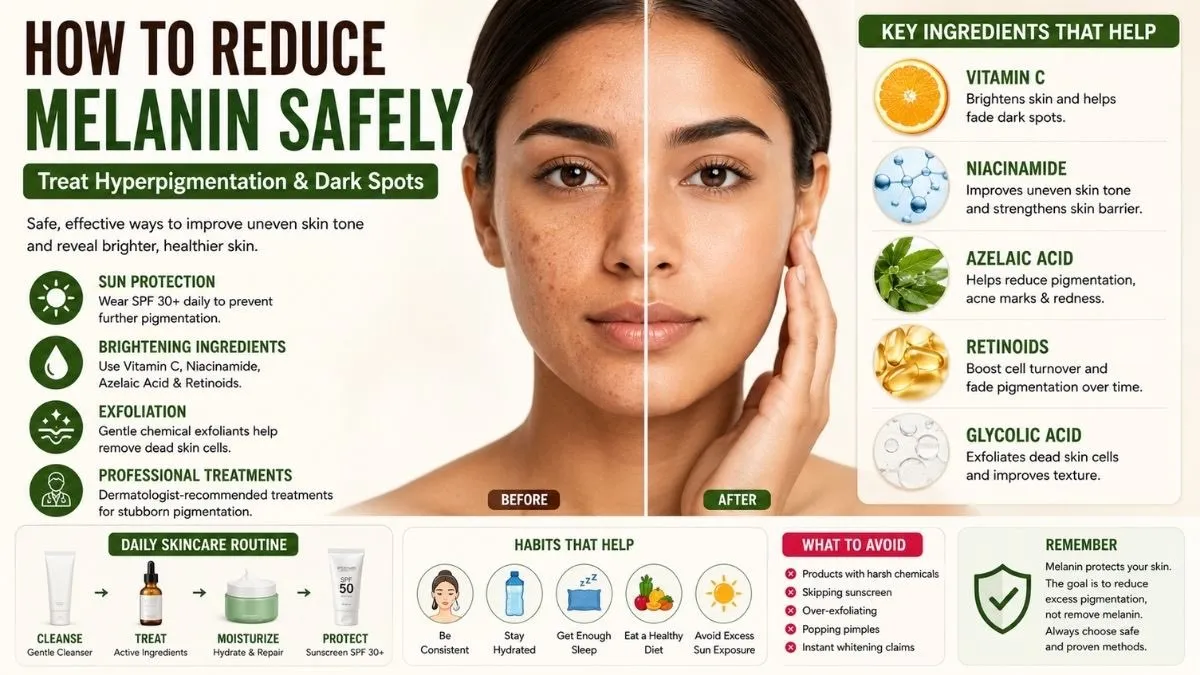
1. Wear Sunscreen Every Day
Daily broad-spectrum SPF 30 or higher is one of the most effective ways to prevent existing pigmentation from becoming darker and to reduce the risk of new spots forming.
2. Vitamin C
Vitamin C is one ingredient the American Academy of Dermatology lists for fading dark spots. It is not a guarantee of results, and a formulation that irritates your skin may be counterproductive.
3. Niacinamide
An ingredient name alone does not show how well a specific niacinamide product will work. Check its intended use and avoid assuming it will treat every cause of pigmentation.
4. Azelaic Acid
Azelaic acid is commonly used for acne-related pigmentation and melasma under appropriate guidance.
5. Retinoids
Topical retinoids encourage skin cell turnover and may gradually improve pigmentation, though they can cause irritation and should be used as directed.
6. Chemical Exfoliants
Products containing glycolic acid or lactic acid may help remove surface skin cells, supporting a more even complexion. Avoid excessive exfoliation, which can worsen irritation.
7. Professional Treatments
Depending on the cause of pigmentation, a dermatologist may recommend:
- Chemical peels
- Laser treatments
- Prescription creams
- Microneedling (in selected cases)
Professional evaluation is especially important for persistent or changing pigmentation.
Home remedies and supplements are not a shortcut
Eating extra vitamins A, C or E is not an established treatment for unwanted pigmentation. Food and supplements are not interchangeable with topical medicines. Do not use dietary changes as a substitute for identifying the cause of a dark patch.
Natural does not guarantee gentle or safe. If a product burns or stings, stop using it: irritation can itself leave dark marks. Never apply household bleach to skin.
Habits That Help
- Apply sunscreen daily
- Reapply SPF when outdoors
- Avoid picking acne
- Follow a consistent skincare routine
- Introduce active ingredients gradually
- Stay patient—visible improvement often takes weeks to months
What to Avoid
Avoid products or practices that:
- Promise permanent skin whitening
- Contain unapproved ingredients
- Cause burning or severe irritation
- Encourage mixing multiple strong actives without guidance
- Skip sunscreen while using pigment-correcting products
Frequently Asked Questions
Healthy melanin is a normal and beneficial part of your skin. Most treatments target excess pigmentation rather than permanently reducing your natural melanin.
Improvement depends on the cause and treatment used. Many topical products require several weeks or months of consistent use before noticeable results appear.
Vitamin C is widely used to help brighten skin and reduce the appearance of some forms of hyperpigmentation.
Sunscreen helps prevent pigmentation from becoming darker and supports the effectiveness of other treatments.
Seek professional evaluation if pigmentation changes rapidly, becomes painful, bleeds, has irregular borders, or does not improve with appropriate skincare.
Final Thoughts
Melanin is essential for healthy skin, and the goal of treatment should not be to remove it entirely. Instead, focus on addressing unwanted hyperpigmentation safely with consistent sun protection, evidence-based skincare ingredients and professional advice when needed.
Improving uneven skin tone is usually a gradual process, but a balanced skincare routine and realistic expectations can lead to noticeable improvements over time while maintaining the skin’s natural protective functions.
Sources
American Academy of Dermatology: fading dark spots in darker skin tones. See its guidance on identifying the cause, sun protection, topical ingredients and irritation.